About A-DCA
Product scope, operator disclosure, methodology and the limits of published evidence.
Operator and authorship
A-DCA is independently designed, developed and operated by the pseudonymous software developer publishing as @SerK132153. The operator provides automation software and technical support, not personalized investment advice.
No legal entity, financial-services license, broker status, custodial license, external security audit or audited performance record is claimed on this site.
Content and methodology reviewed: July 24, 2026. Material product or calculation changes should be reflected with a new review date.
Operator and support contact details are published on the Contact page.
Advantages
Limited permissions
A-DCA does not request withdrawal permission for supported CEX credentials
The trading deposit remains in the connected provider account. Trade-only access reduces direct withdrawal exposure but retains harmful-trade, provider, credential and market risks.
Scheduled automation
Configured workflows run automatically when the service and provider are available
The service reduces manual strategy setup, but users remain responsible for permissions, balances, account security and monitoring orders and results.
Rule-based order sizing
Configured indicators can change order size during volatile periods
Larger orders can increase both potential recovery and downside exposure. No monthly return, profitable close or recovery period is promised.
Main Idea
A-DCA automates rule-based BTC spot trading through supported exchange adapters. The current code includes OKX, Binance, Coinbase, Kraken and Hyperliquid integrations, with different availability and evidence by provider. A-DCA does not receive custody of the trading deposit; assets remain in the connected provider account, subject to trading, credential, provider, protocol and market risks.
User
Registers in the service
OKX Exchange
USDT deposit with API access
A-DCA Robot
Automatic trading on spot market
Results
Daily BTC purchase + additional trades
Access Security:
DCA spreads BTC entries over time using a configured base amount. It can change the average entry price but cannot ensure a lower final cost, profit or limited drawdown. A-DCA also includes a separate BTC-first workflow; actual behavior depends on mode and parameters.
Methodology Features
In addition to regular DCA purchases, the service algorithm performs additional, irregular asset purchases in situations when the BTC rate significantly or sharply decreases. For this, the algorithm monitors three technical indicators:
Indicators
- ✅ Relative Strength Index (RSI)
- ✅ Commodity Channel Index (CCI)
- ✅ Bollinger Bands
Regular DCA
Daily purchases of fixed amount
Additional Purchases
Purchases when indicators trigger
Final Result
Larger entries increase both opportunity and downside exposure
When the price reaches certain boundary values of indicators, the algorithm additionally purchases BTC in an increased volume, which is calculated taking into account a certain coefficient. For example, if the RSI value reaches the lower boundary (in the algorithm this parameter is 25, it can be adjusted), the algorithm calculates the size of an additional trade as the size of a DCA purchase multiplied by a coefficient (by default 5, also adjustable). Thus, the more indicators trigger simultaneously (and this happens when the BTC rate decreases the most) - the larger the amount the robot purchases the asset for.
This approach increases purchase volume when several configured signals trigger. It can improve a later result if price recovers sufficiently, but it also places more capital at risk during a continuing decline.
Sales Mechanism
Sales are executed using the 'ladder' method. Parameters preset the maximum expected percentage by which BTC rate is expected to grow in the long term (can be changed per user). All previously purchased lots are distributed into several groups up to the maximum level with a certain step. When the next planned BTC rate is reached, the robot automatically sells a predetermined portion (one or a group of lots) and fixes profit. If the price goes even higher - the robot sells the next batch of lots, and so on. The number of steps and the size of each step in the 'ladder' are set in the service parameters in advance, they can be changed either at the user's request, or centrally, in cases when the long-term price movement trend of the asset changes.
Visualization of the 'ladder' sales process:
1. Lot Distribution
All purchased lots are distributed across price levels
2. Price Rise to $91,000 and Sale
When each price level is reached, the robot sells the corresponding batch
3. Profit Fixation at $91,000 Price Level
Profit is fixed at each level, reducing risks
How the 'ladder' works:
Lots are sold not all at once, but as the price rises
Part of the profit is fixed at each level
Robot independently tracks price levels
Number of levels and steps are configurable
Real A-DCA Trade Examples
The screenshots below document three dated trades from March 2023 and the calculations used in the original presentation. They are isolated historical examples, not an audited sample, representative track record or forecast.
Real A-DCA Trade Examples
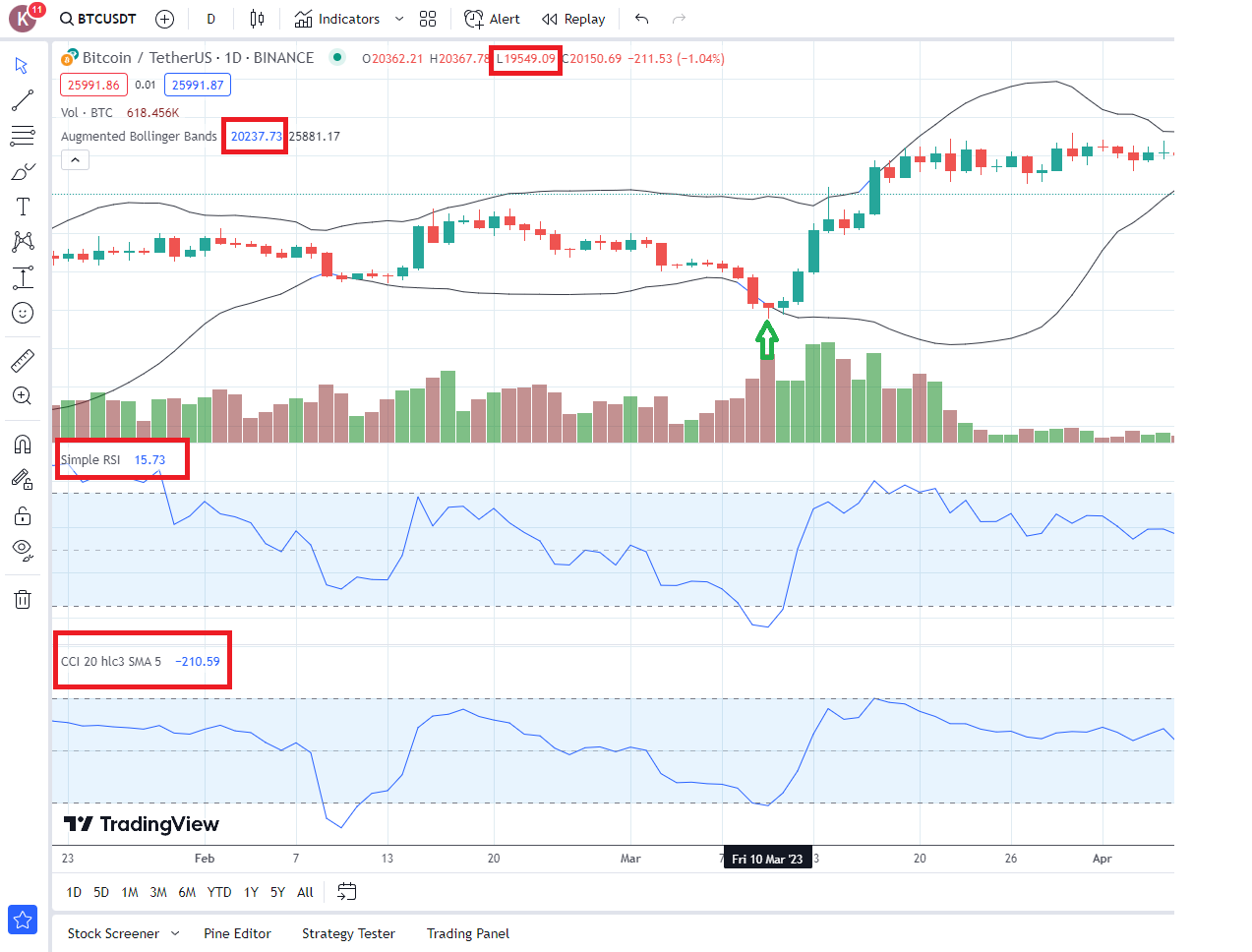
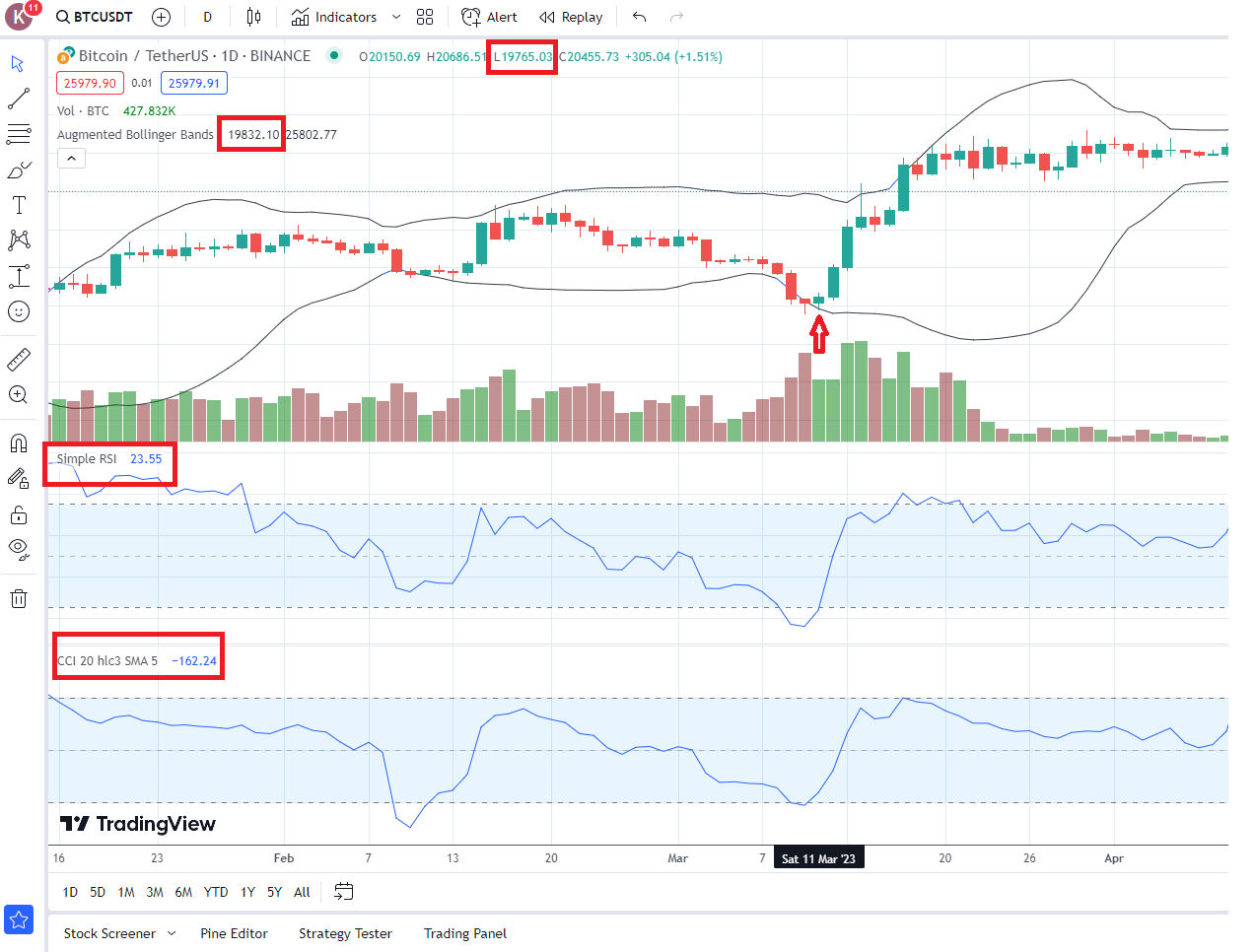
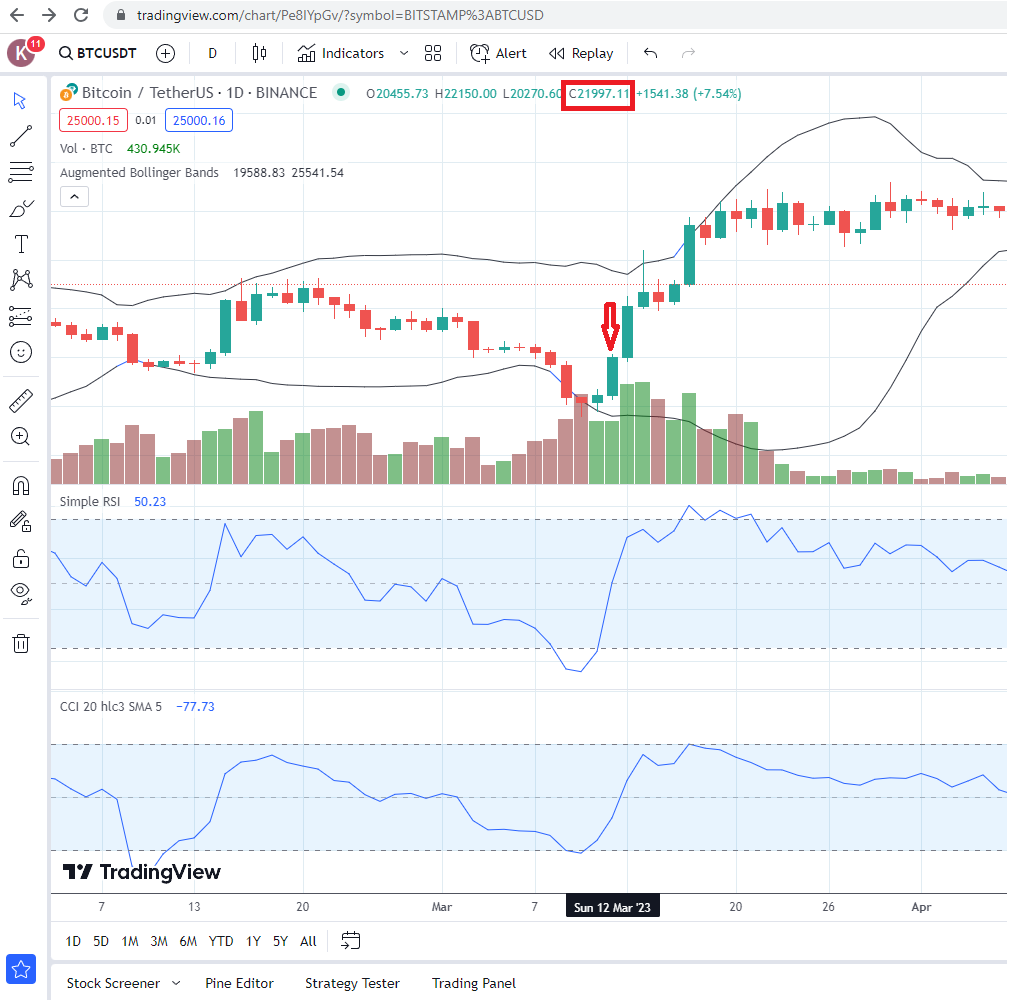
Brief Strategy Description:
RSI, CCI (-100), CCI (-200), Bollinger Bands
Volume = N(indicators) × K(coefficient) × D(DCA)
6.1% shown for the selected three-day example; not an average or expected return
Automatic switching from long to short and from short to long
Detailed Trade Analysis from Examples Above
Example #1: Long entry during strong rate decline (03/10/2023)
Note: All 4 indicators triggered simultaneously, leading to maximum trade volume increase.
Example #2: Long entry during strong rate decline (03/11/2023)
Note: CCI did not reach -200 level, so only one CCI signal counted.
Example #3: Long close during strong rate rise (03/12/2023)
Details: Long entries were made on 03/10, 03/11/2023 by indicators and by DCA. Take-profits from 2.5% to 7.5% were realized. Long closing period — 3 days.
Key A-DCA Formula
Calculation examples from trades:
User Interaction Model
The service operates on a subscription model. For this, you need to use your non-custodial blockchain address and maintain a certain USDT balance on it, which will be automatically debited regularly for subscription renewal - either monthly or once a year, depending on the tariff chosen by the user. Since the main trading deposit and funds for service payment are located on different wallets (on the exchange and on a personal wallet) - service payment transfers do not reduce the user's trading deposit and do not affect the calculation of the final financial result.
Personal Wallet
User's non-custodial EVM wallet
A-DCA Service
Automatic payment deduction
OKX Exchange
Trading deposit
Model Advantages:
Trading deposit separated from service payment
Subscription renews automatically
Service payment does not affect profit calculation
Choice between monthly and annual tariff
Personal Data
A-DCA uses wallet or exchange identifiers and stores encrypted trading credentials needed for account access. The Contact form opens the user's mail client with the name, email and message they enter. The service does not claim anonymous use or absence of personal-data processing; review the Privacy Policy for scope and third-party providers.
A-DCA Service
A blockchain address can identify an account without a password
Addresses, exchange configuration and encrypted credentials are processed
Contact details are processed only when a user submits them through the contact workflow
OKX Exchange
User identity verification
Identity data is handled by the selected provider under its own controls and terms
Verification and data-protection duties depend on the provider and applicable jurisdiction
The product aims to limit direct profile data while retaining operational records
Login via crypto wallet
KYC and access rules depend on the selected provider and jurisdiction
OKX REST API Integration
A-DCA uses standard OKX REST API v5 endpoints. No special permissions required beyond 'Trade'.
GET /api/v5/market/candlesOKX Docs ↗Get candlestick (OHLCV) data for the trading pair. Used to read current price and calculate technical indicators (RSI, CCI, Bollinger Bands).
POST /api/v5/trade/orderOKX Docs ↗Place a new market order (BUY or SELL). Used by the DCA algorithm to execute trades and by the risk management system to close positions.
GET /api/v5/trade/orderOKX Docs ↗Get details of a specific order by order ID. Used after placing an order to retrieve the actual fill price, amount, and commission.
GET /api/v5/account/balanceOKX Docs ↗Get account balance. Used to check available USDT and BTC balances before placing orders.
🔒 All API calls use 'Trade' permission only — withdrawal permission is never required.